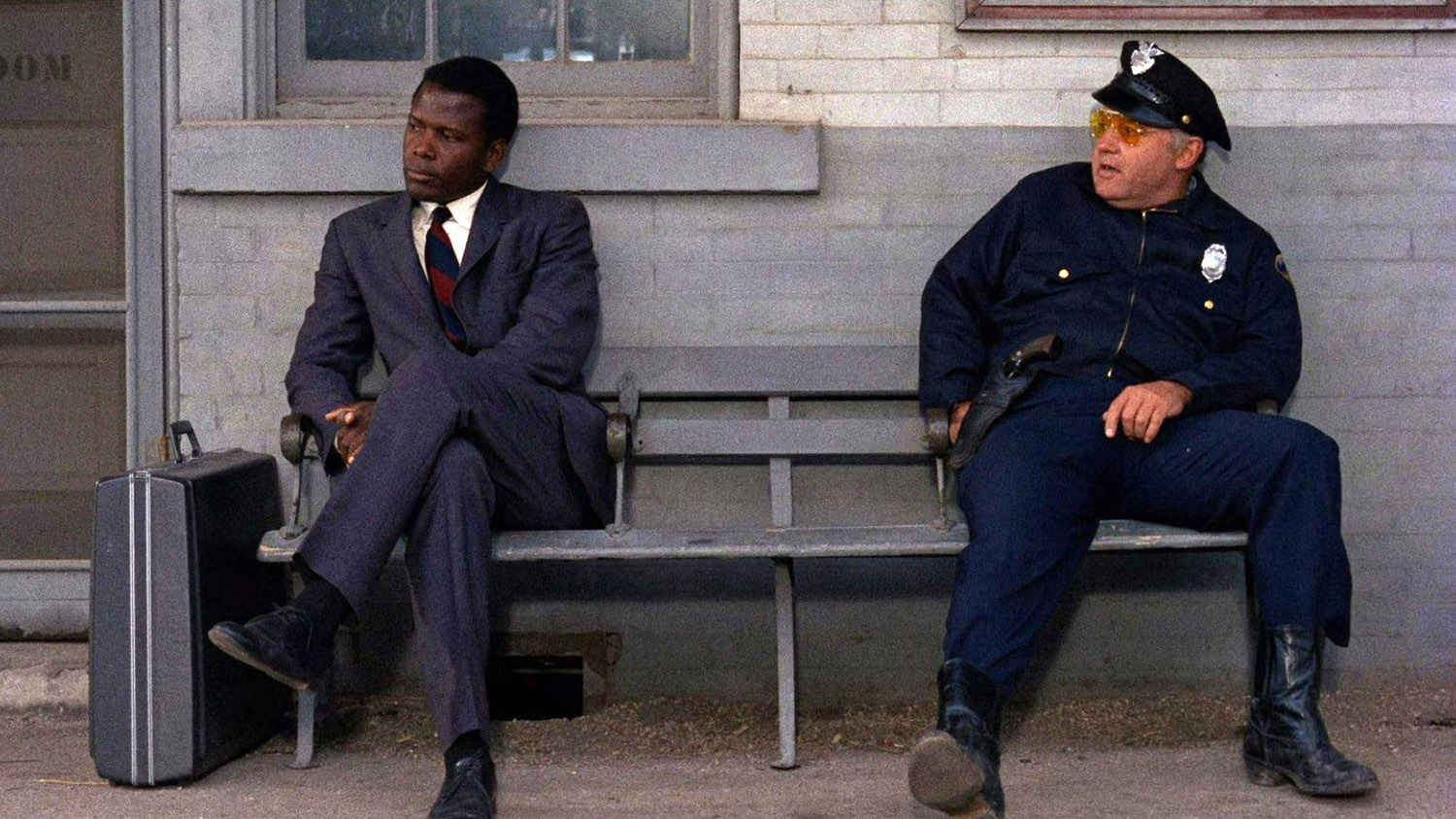
 Watching "In the Heat of the Night," the film's message enthralled me (I cried at the end). What begins as a murder mystery in the fictional town of Sparta, Mississippi, quickly transforms into something far more—a blistering examination of racial prejudice that feels uncomfortably relevant even today.
 Right off the bat, we see Virgil Tibbs waiting at a train station in the middle of the night, dressed in very formal attire. When he is arrested for simply being a black man in the wrong place at the wrong time, the casual nature of this injustice is breathtaking. Sidney Poitier's controlled performance in these moments speaks volumes. The way he keeps his dignity intact even as he is being manhandled by officers who've already decided his guilt solely because of his skin color.
When the officers find out Tibbs is a Philadelphia police detective, it creates even more tension. Chief Gillespie embodies the complicated nature of prejudice—he's not a cartoonish villain but a man wrestling with his own biases while grudgingly recognizing Tibbs' expertise. The tension grows just a little bit more when Tibbs corrects Gillespie's mispronunciation of his name.
In my opinion, the most shocking scene in the movie occurs when Tibbs slaps Endicott, a wealthy plantation owner, after being struck first. I was truly shocked knowing that such an act could mean death for Tibbs. I love how he refuses to accept humiliation passively. Just seeing how Poitier reacts truly shows how amazing an actor he is.
The murder mystery itself, while engaging, serves as scaffolding for exploring deeper themes. The real crime being investigated isn't just the death of a businessman, but the systematic dehumanization of an entire people. Each character Tibbs encountered, from the diner owner who refused to serve him to the teenagers who attacked him, he kept a strong face. At the same time, we are shown the different faces of institutionalized racism.


No comments:
Post a Comment