Friday, July 25, 2025

Final Post Prompt

 Welcome to Summer Advantage | Summer Advantage | High Point University

All about Summer Advantage at High Point University 

   I liked Summer Advantage specifically because of the friends that I made, getting used to the campus, and being able to be independent. I am extra prepared for the fall semester because I was able to see how I could do this all by myself, without relying on my parents or other guiding figures. I wasn’t originally going to participate in Summer Advantage, but a friend I met last summer convinced me to join the program. 
    Regarding friends and living with others, I had friends before coming here, and we spent time together on the first night. They brought their friends that they had made, which gave me the chance to meet more people. I also made friends in both of the classes I took. Living in a communal space was something I had to get used to, as I had never shared a room growing up; however, it was an enjoyable experience. I loved my summer roommate, and having her there helped me make more friends as well. There were minuscule problems, but we were able to resolve them relatively quickly. The thing that helps us all is communication. 
    It was a considerable amount of work, considering how much we learned each day. The work helped me engage more and learn better. I would learn more as I did my job. Both of my professors were very engaging. I usually struggle to learn the first time around, but I learned quickly because the classes were so engaging. I liked the class discussions because they helped me to learn more as well. 
    I agree with Sarah; waking up on time wasn’t the easiest thing to do. I’m not good at waking up on time; my roommate, Liv, usually has to wake me up. Alarms haven’t worked for me, but I’m going to train myself to wake up earlier by using multiple alarms every day. Summer Advantage also helped me learn how to wake up on time, as I hadn’t been the best at getting up early in the past. 
    Overall, Summer Advantage was extremely helpful because I made some great friends, completed some credits, and broadened my horizons for what I want to be or do in the future. I think that Summer Advantage should start a little earlier, covering the entire month of July (July 1st to July 31st), because I feel it sounds a little shorter and seems more appealing to people who are on the fence about attending Summer Advantage.

Wednesday, July 23, 2025

In the Heat of the night reflection

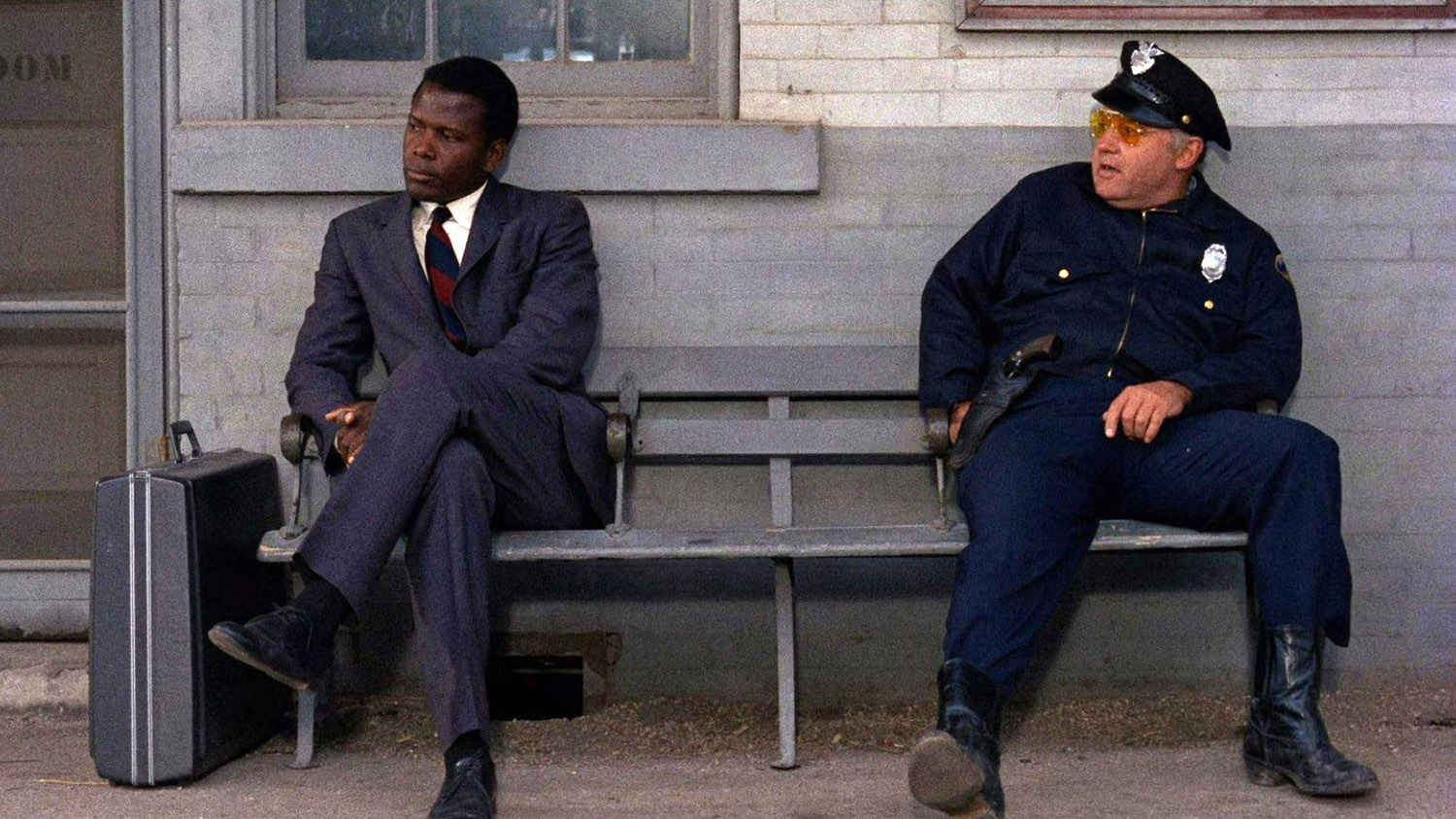
    IN THE HEAT OF THE NIGHT (1967) – AFI MOVIE CLUB | American Film InstituteWatching "In the Heat of the Night," the film's message enthralled me (I cried at the end). What begins as a murder mystery in the fictional town of Sparta, Mississippi, quickly transforms into something far more—a blistering examination of racial prejudice that feels uncomfortably relevant even today.
Right off the bat, we see Virgil Tibbs waiting at a train station in the middle of the night, dressed in very formal attire. When he is arrested for simply being a black man in the wrong place at the wrong time, the casual nature of this injustice is breathtaking. Sidney Poitier's controlled performance in these moments speaks volumes. The way he keeps his dignity intact even as he is being manhandled by officers who've already decided his guilt solely because of his skin color. 

When the officers find out Tibbs is a Philadelphia police detective, it creates even more tension. Chief Gillespie embodies the complicated nature of prejudice—he's not a cartoonish villain but a man wrestling with his own biases while grudgingly recognizing Tibbs' expertise. The tension grows just a little bit more when Tibbs corrects Gillespie's mispronunciation of his name.
    In my opinion, the most shocking scene in the movie occurs when Tibbs slaps Endicott, a wealthy plantation owner, after being struck first. I was truly shocked knowing that such an act could mean death for Tibbs. I love how he refuses to accept humiliation passively. Just seeing how Poitier reacts truly shows how amazing an actor he is.
    The murder mystery itself, while engaging, serves as scaffolding for exploring deeper themes. The real crime being investigated isn't just the death of a businessman, but the systematic dehumanization of an entire people. Each character Tibbs encountered, from the diner owner who refused to serve him to the teenagers who attacked him, he kept a strong face. At the same time, we are shown the different faces of institutionalized racism.

EOTO: Legal Argument for Civil Rights


Observing the 60th Anniversary of the Civil Rights Act | San Mateo County  Libraries


Positive

Civil Rights Act of 1964

    The Civil Rights Act of 1964 stands as perhaps the most comprehensive piece of civil rights legislation in American history. This Act of revolutionary: it outlawed discrimination based on race, color, religion, sex, or national origin, effectively ending legal segregation that had been the cornerstone of Jim Crow society. Beyond its immediate legal impacts, the act opened doors to better educational access for Black Americans and represented the first significant step toward changing deeply enriched social norms. Yet legislation alone could not immediately transform entrenched social norms. 

Presidential Leadership:

President John F. Kennedy's approach to civil rights demonstrated the crucial role of federal enforcement in making legislative victories meaningful. Kennedy understood that challenging segregation required not just moral arguments but it demanded the full power of federal authority. Kennedy established a precedent that federal law would supersede local customs of segregation. He also dramatically increased the hiring of Black attorneys within the department and created an active civil rights division focused specially on voting rights enforcement. Kennedy demonstrated the federal government's willingness to protect those fighting for civil rights, even when local authorities refused to do so. 

Breaking Barriers:

Shirley Chisholm was born November 30, 1924 in New York. Her education at the teachers college at Columbia University prepared her for a groundbreaking political career that would shatter multiple barriers simultaneously. She was the first African American to run for a major party nomination for president of the United States. Her seven terms in the U.S House of Representatives from 1969-1983 demonstrated sustained political leadership and paved the way for future generations of Black political leaders. Her career embodied the broader transformation that civl rights legislation had made possible, while simulaneously revealing how much individual courage was still required to claim the rights that law had theoretically guaranteed. 


Economic Justice Deferred:

The Memphis Sanitation Strike of 1968 revealed that legislative victories, while crucial, had not addressed the economic foundations of inequality. The breaking point came when two workers Echol Cole and Robert Walker were crushed to death in a malfunfctioning garage truck, highlight the dangerous conditions these workers faced daily. On February 12, 1968 workers walked off the job with clear demands: better working conditions, higher wages, and union recognition. The strike demonstrated that civil rights struggle extended beyond access to public accommodations or voting booths; it encompassed the fundamental right to earn a living wage and work in safe conditions.


Negative

The Four little Girls: 

On September 15th, 1963, the 16th Street Baptist Church bombing in Birmingham, Alabama, shattered more than just a house of worship-it shattered the nation's conscience. When the KKK's bomb exploded, it claimed the lives of 4 innocent little girls between the ages 11-13. Over 8,000 people attended the funeral of these young victims, while people across the state offered comfort and condolences to the grieving families. 

The Three Civil Rights Workers: 

In the summer of 1964, Freedom Summer emerged. It was a cover registration campaign in the deeply segregated state of Mississippi. Among the selfless volunteers were three young men, James Chaney, a 21-year-old black man from Mississippi, Andrew Goodman, a 20-year-old white college student from NYC, and Micheal Schwerner, a 24-year-old white man also from NYC. Deputy Sheriff Cecil Price stopped the 3 men while investigating a church burning. James Chaney was beaten significantly more than his companions. They were all beaten to death and weren't given justice until 2005.

The Edmund Pettus Bridge:

On March 7th, 1965, 600 peaceful protesters gathered at Brown Chapel AME Church, preparing for a 54-mile march to Montgomery to demand voting rights. These very peaceful protests were met with violent opposition when they encountered a wall of Alabama state troopers wearing mask masks. The brutal attack created lasting trauma for activists and exposed strategic divisions within the movement, particularly after MLK's controversial "Turnaround Tuesday" Decision. 

Standing at the Schoolhouse Door: 

On June 11, 1963 at the University of Alabama, Governor George Wallace made his infamous stand, physically blocking the doors to prevent two black students, Vivian Malone and James Hood from becoming the first black students in the university's 132-year history. This exposed the moral bankruptcy of segregation to the entire nation. This prompted President Kennedy to deliver a powerful civil rights speech that evening. Although Malone, and Hood were vert brave, they sadly faced harassment, threats, and isolation. However, their determination created national support for the civil rights movement and contributed directly to the passing of both the Civil Rights Act of 1964 and the Voting Rights Act of 1965.

Final Thoughts

In remembering these pivotal moments, both positive and negative, we honor not only those who sacrificed but also recognize our ongoing responsibility to continue they work. Their courage reminds us that social progress requires individuals willing to stand up for justice, even when the cost is high. 

I used Claude.AI to help me organize my notes that I took during my fellow classmates presentations. 


The Third Klan

Klansville U.S.A.: Trailer

Klansville USA

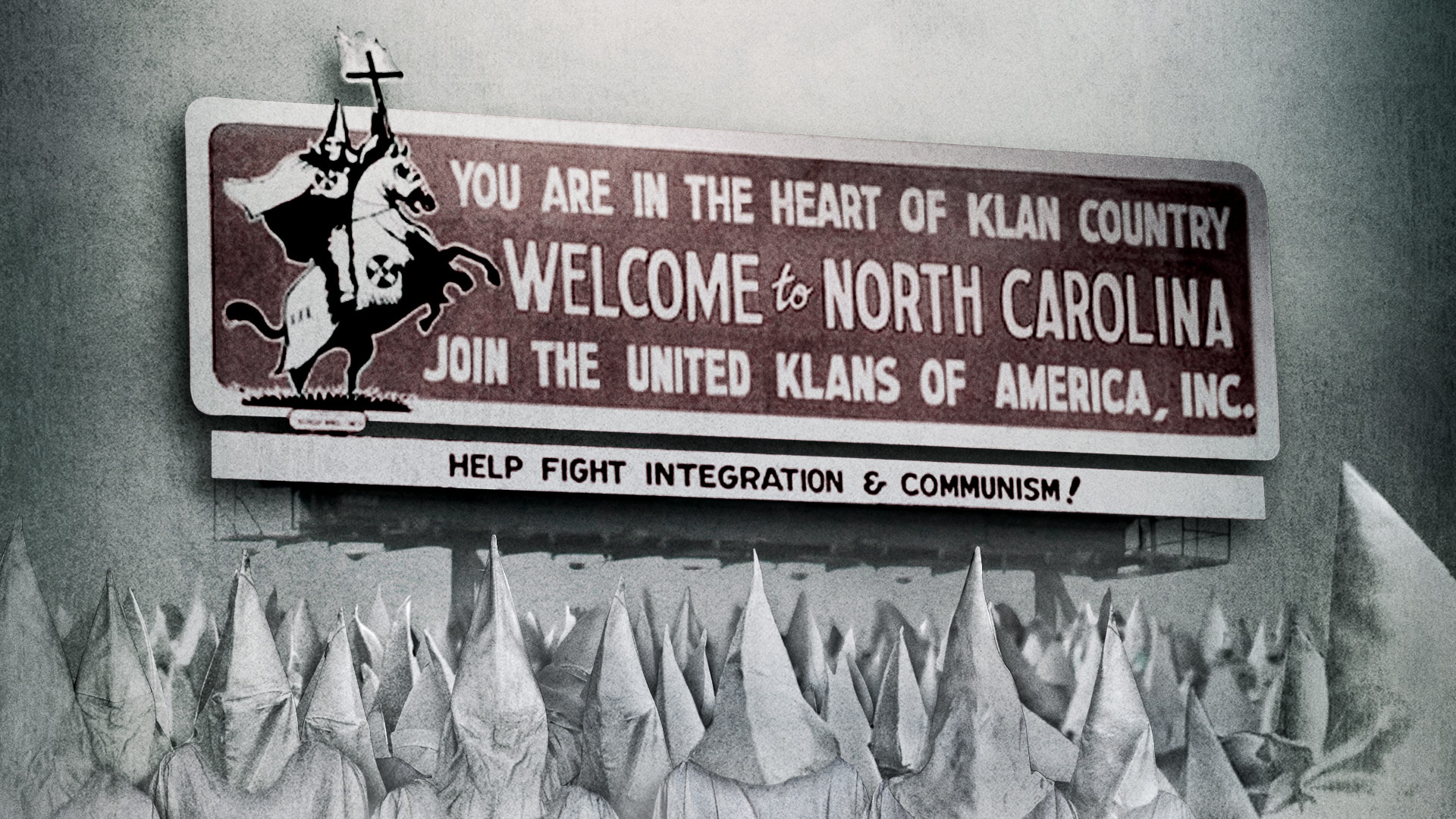
In the 1960s, North Carolina's KKK membership grew to about 10,000 members, earning the state a new nickname: "Klansville, U.S.A." The documentary primarily focuses on Bob Jones, the most influential Grand Dragon in the United States during the 1960s. What surprised me is that North Carolina has been considered one of the most progressive Southern states; however, it had the most significant number of Klan members, with over 12,000 under the leadership of Bob Jones.
    In the 1960s, most members were white people with lower incomes, such as Bob Jones, who felt as though they were being represented. In North Carolina, they viewed state leaders as not resisting the moves toward integration strongly enough. They also had a fear that they were being left behind while black people were progressing and moving forward into jobs that used to be theirs. 
    One of the highlights of the documentary was its effective use of archival footage and interviews to illustrate how Jones mobilized thousands of ordinary citizens who felt economically and socially displaced. Something that shocked me beyond words was the Klan's massive rallies. Families would gather, just as if it were a typical Sunday. Men wore button-down shirts with ties, and women wore their hair in buns. Many families brought their kids. This normalization of extremism was particularly jarring because these weren't fringe gatherings but mainstream social events. 
    On August 14, 1966, over 5,000 people gathered at the Memorial Auditorium in Raleigh, North Carolina, to support Klan leaders who were under investigation by the federal government. What surprised me was that this gathering was one of the largest in the state that year. The idea that thousands would publicly rally to support Klan leaders being investigated by Congress demonstrates how mainstream the organization had become. 
    The most disturbing aspect, in my opinion, was how this extremist movement grew so much not just in the shadows but also became visible—a family-friendly social movement in a supposedly progressive state. 
     

Claude.Ai was used to organize my notes I took during the documentary.


Sunday, July 20, 2025

Green Book Reflection

Green Book - Movie - Where To Watch

 A Journey Through America's Racial Divide


    The film's most captivating moments emerge from the cultural clash between its protagonists. Tony's introduction to acceptable dining etiquette creates genuinely funny exchanges as Dr. Shirley attempts to civilize-Tony's street wisdom, contrasting with Shirley's intellectual sophistication. The scene where Shirley helps Tony write romantic letters to his wife showcases how their relationship transcends their differences, with each man teaching the other something valuable. 

Most Interesting Scenes

    The film's most captivating moments emerge from the cultural clash between its protagonists. Tony's introduction to acceptable dining etiquette creates genuinely funny exchanges as Dr. Shirley attempts to civilize his crude driver. Their late-night conversations reveal layers of complexity in both characters, with Tony's street wisdom contrasting with Shirley's intellectual sophistication. The scene where Shirley helps Tony write romantic letters to his wife showcases how their relationship transcends their differences, with each man teaching the other something valuable.

Most Shocking Scenes

    The film doesn't shy away from the brutal realities of Jim Crow-era segregation. Perhaps most jarring is the scene where Dr. Shirley, despite being the evening's celebrated performer, is barred from using the restaurant's bathroom or dining room. The moment when police officers arrest both men simply for being together after dark exposes the arbitrary cruelty of racist enforcement. Another deeply unsettling sequence occurs when Dr. Shirley is assaulted at a roadside bar, highlighting the constant danger he faced despite his fame and talent. 

Conclusion

"Greek Book" succeeds in humanizing a dark chapter of American history through the lens of personal friendship. While some critics argued the film oversimplified complex racial issues, it effectively demonstrates how understanding can emerge from the most unlikely partnerships. The movie reminds us that progress often happens one relationship at a time, making it both an entertaining road movie and a meaningful examination of prejudice, dignity, and the transformative power of human connection.

I used Claude.AI to organize the information i got from the movie Greek Book

Brown V. Board of Education - History

Why "Brown v Board of Education" Is ...

Defense of Educational Segregation - Brown V. Board Era

Honorable Justices of the Supreme Court, I stand before you today not as an advocate for inequality, but as a defender of constitutional order, legal precedent, and the jurisdiction of our states to govern according to the will of their people. The question before this Court is not whether separate education is preferable, but whether this Court has the authority to overturn nearly sixty years of established constitutional interpretation and dismantle a system that has governed American education since the Reconstruction era.

    In 1896, this very Court, in its wisdom, decided Plessy v. Ferguson and established the doctrine of "separate but equal." For fifty-eight years, this precedent has stood as the settled law of the land. Sixteen Supreme Court justices across multiple decades have affirmed and reaffirmed this principle. The doctrine has not merely survived; it has flourished as the constitutional framework under which millions of American children have been educated.

    To overturn Plessy now would be to declare that nearly six decades of jursidction were fundamentally wrong, that countless federal and state courts did wrong in their interpretation, and that the American legal system itself cannot be trusted to maintain consistency. Such a decision should shake the very foundations of legal certainty upon which our republic depends. 

    The Fourteenth Amendment, ratified in 1868, was drafted and passed by Congress at a time when segregated schools already existed throughout much of the nation. The very lawmakers who wrote these constitutional provisions understood that equal protection did not require identical treatment, but relatively equivalent opportunities within the established social framework of their time.

Since the withdrawal of federal troops in 1877, individual states have exercised their constitutional police powers to organize education in ways that serve the needs of their communities and reflect the values of their citizens. This represents not merely legal precedent, but the fundamental principle of federalism that allows states to govern themselves according to local conditions and democratic will. 

For three generations, spanning the entire living memory of most Americans, separate educational systems have provided structure, stability, and opportunity for both races. This system has established institutions, trained educators, and built communities around schools that effectively serve their populations. 

The sudden disruption of this system would create chaos in thousands of school districts across the nation. Teachers would lose their positions, and communities would lose their institutions central to their identity, and children would be thrust into unfamiliar environments during their most formative years. The economic disruption alone would devastate communities that have built their infrastructure around the current system. 

Moreover, the separate system has enabled both racial communities to establish educational institutions tailored to their specific needs and circumstances. Black colleges and schools have produced generations of leaders, professionals, and educators who have strengthened their communities. To suggest that these separate institutions are inherently inferior to one another, dismissing the achievements of their graduates and the dedicated work of countless educators, is unwarranted. 

The American system of government acknowledges that different regions may address social issues in ways that reflect their unique histories, demographics, and cultural traditions. The South has developed its educational approach through decades of democratic processes, legislative action, and community involvement. 

    To impose a uniform national standard would violate the principle that states retain authority over education, a power not delegated to the federal government in the Constitution. Such federal overreach would establish a dangerous precedent for the central government's involvement in traditionally local matters. 

    This Court's proper role is to interpret the law, not to remake society according to contemporary social theories. The Constitution must be interpreted by its text and the understanding of those who ratified it, rather than according to evolving social preferences or academic theories about child psychology.

Suppose the American people wish to change the fundamental structure of education. In that case, such a change should come through the democratic process—through state legislatures, Congress, and constitutional amendment—not through judicial decree that bypasses the will of the people.

    Honorable justices, I urge this Court to respect the wisdom of precedent, the authority of states, and the stability of institutions that have served this nation for generations. The separate but equal doctrine represents not discrimination, but recognition that equality can be achieved through different means suited to different circumstances.

    To preserve constitutional order, respect democratic governance, and maintain social stability, this Court should affirm that separate educational facilities, when truly equal, satisfy the requirements of the Fourteenth Amendment. 

My Research and organization of my notes come from Claude.AI.

Mock Trial Reflection

Plessy v. Ferguson | American Experience | Official Site | PBSThe arguments presented in defense of Louisiana's Separate Car Act of 1890 reveal the complex of intersection of economic interests, state sovereignty, and racial segregation that characterized the post-reconstruction south. Louisiana positioned itself as a guardian of both economic prudence and states' rights, framing racial separation as a necessary exercise of police power designed to protect property values and ensure commercial stability.
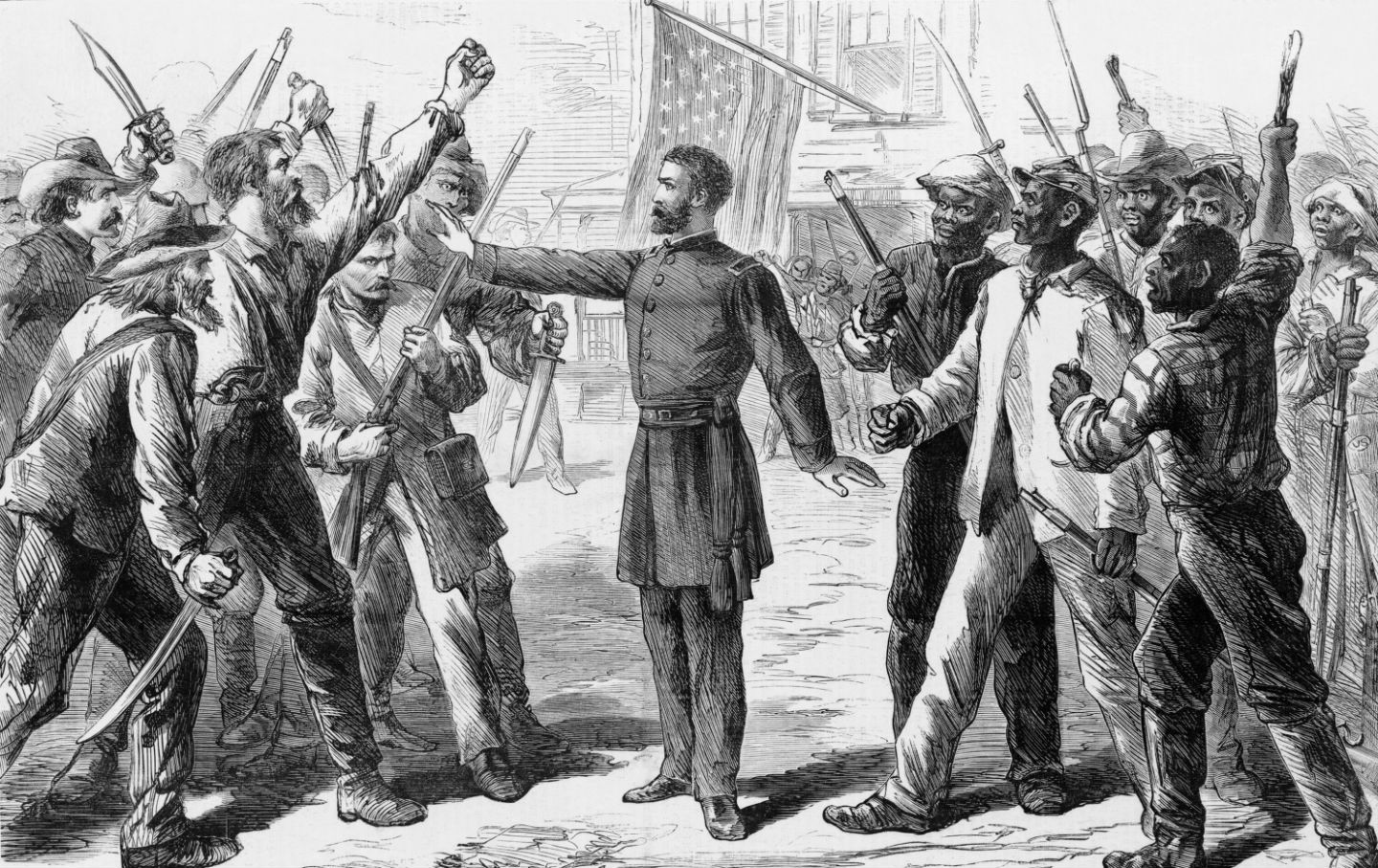
 

The economic rationale centered on protecting railroad profitability by catering to white passengers, who were characterized as the primary purchasers of first-class accommodations and the source of the highest profit margins. This argument suggested that any disruption to segregated seating would trigger boycotts and financial losses that would ultimately harm the state's transportation infrastructure and economy. 

Louisiana's defense also emphasized the prevention of what it termed "costly disruptions," claiming that integrated railroad cars led to violence, property damage, and declining ridership. By positioning segregation as a form of conflict prevention, the state attempted to present discriminatory practices as pragmatic solutions to social tensions rather than as instruments of racial oppression. 

This historical perspective illuminates how economic arguments were strategically deployed to justify and legitimize racial segregation. The state's emphasis on sovereignty and police powers reflected broader tensions over federal versus state authority in the post-Civil War era. These arguments, while ultimately rejected by changing social and legal standards, demonstrate how discriminatory practices were often rationalized through appeals to economic necessity and public order. 

Understanding these historical justifications helps us recognize how economic and legal frameworks can be manipulated to perpetuate inequality, while also appreciating the long struggle forward more equitable and just policies that followed. 

I want to clarify that I used Claude.Ai to help me organize my notes I took during the mock trial.

Monday, July 14, 2025

Reflection on Reconstruction After the Civil War


The Reconstruction-Era Violence Lurking in the Southern Air | The Nation

 The Reconstruction Era


    Reconstruction was a chaotic and exciting time. African Americans could sit in the House of Representatives and Senate. This positive effort received backlash. Southern whites couldn't accept previously enslaved individuals as equals. In 2015, there was a mass shooting at a historic church in Charleston. Even a century and a half after the collapse of Reconstruction, the issue of racism remains. 
When the word of freedom spread, enslaved people packed their bags. In the summer of 1862, many enslaved people found haven. Approximately 180,000 freedmen answered the call to military service. This altered the definition of a military victory. Reconstruction is the process by which American society attempted to come to terms with the consequences of the Civil War — the destruction of slavery and navigating their rights/status.
When Abraham Lincoln spoke about Reconstruction at the White House, he claimed that wise black men and African American Veterans should have the right to vote. John Wilkes Booth said that it would be his last speech. JWB is Abraham Lincoln's killer. Newly freed slaves were attempting to reunite their families. Specifically, by finding their children, they can build the lives they dreamed of. 
Andrew Johnson was sworn into the presidency in a hotel in Pennsylvania. He was the first man in the country to be appointed president following the assassination of the previous president. Frederick Douglass did not like the new president. Andrew Johnson didn't want to shake the hand of a black man. Johnston was undermining the war's outcome, and they couldn't do anything about it because Congress was in recess. Johnson ordered Howard to give and restore the Land to the Confederates. 
Racism is the most profound legacy of slavery in our society. The Lost Cause was the reality of the war. Southerners believed that their cause was valid, and they fought because the North was attempting to "suppress their rights." In 1865, a law was passed that was explicitly targeted towards African Americans. This law recognized that slavery had been abolished, but there was little change from slavery to freedom. Every black person had to sign a contract for one year with a white person. 
In 1866, the KKK was created. The Land did the same things that slave patriots did. Andrew Johnson made his version of Reconstruction without Congress's approval. The Civil Rights Act of 1866 effectively abolished the notion that people could be removed from the nation. By the end of 1867, more than 80% of black men had the right to vote. 

Sunday, July 13, 2025

The Reconstruction Amendmenets

13th, 14th, and 15th Amendments

Introduction

Reconstruction' Review: A Dream Deferred - WSJ
The Reconstruction Amendments consist of the 13th, 14th, and 15th Amendments. They were ratified between 1865 and 1870. These amendments ended slavery in the United States and guaranteed birthright citizenship, due process, and "equal protection of the laws" under federal and state governments. These amendments also expanded voting rights by outlawing discrimination based on "race, color, or previous conditions of servitude." It also granted Congress the power to enforce the amendment's provisions through federal legislation. Any state that did not allow male citizens 21 years old or older to vote by reducing state proportional representation would be punished. The Confederate states were required to ratify the 13th and 14th Amendments to be allowed to rejoin the Union. The amendments were essential to reuniting the United States during Reconstruction.

13th, 14th, and 15th Amendments 

Soon after the Civil War, Congress passed three amendments known as the Reconstruction Amendments—the 13th, 14th, and 15th Amendments aimed to protect African Americans' civil rights. The states ratifying these amendments drew new attention to women's rights and suffrage. 

Blog Archives - Mr. Holcey's History Site


13th Amendment 

On February 1, 1865, President Abraham Lincoln approved the proposed Amendment. The 13th Amendment states, "Neither Slavery nor involuntary servitude, except as a punishment for crime whereof the party shall have been duly convicted, shall exist within the United States, or any place subject to their jurisdiction." To summarize, the Amendment abolished slavery and involuntary servitude in the United States. However, there is one exception to this Amendment, and that is punishment for a crime. This means that if you were to commit a crime, you could be arrested and prosecuted. 

14th Amendment

On July 28, 1868, the 14th Amendment was ratified by the states and became part of the supreme law of the land. The Amendment states, "All persons born or naturalized in the United States." This granted former slaves citizenship. The Amendment also states, "Nor shall any state deprive a person of life, liberty, or property without due process of law; nor deny to any person within its jurisdiction the equal protection of the laws." This means that due process and equal protection of the law now apply to both the federal and state governments. Also, this amendment got rid of the 3/5 compromise as slaves are now citizens of the United States.

15th Amendment

On February 3, 1870, the 15th Amendment was ratified by the United States. The Amendment states, "The right of citizens of the United States to vote shall not be denied or abridged by the United States or by a State on account of race, color, or previous condition of servitude." This amendment granted African American men the right to vote. This amendment was not enforced well due to a term called disenfranchisement, which means the state is deprived of a right or privilege, especially the right to vote. This was due to segregation rules (separate but equal). This amendment also sparked heated debates over women's suffrage.

Civil Rights Legacy

The Reconstruction Amendments established the constitutional framework that helped enforce Reconstruction and the passage of the Civil Rights Act of 1866 and 1875. These acts aimed to end slavery and ensure full citizenship, civil rights, and voting rights to freed African Americans. This also addressed the growing violence and intimidation against African Americans in the South. However, Supreme Court decisions like Plessy V. Ferguson and the court upholding segregation laws that created "separate but equal" opened the door for racial violence, disenfranchisement through literacy tests, and Jim Crow segregation in the South. 

Credits:

Friday, July 11, 2025

Gone with the Wind Reflection

Mansion That Was the Inspiration for Gone With the Wind Is Up for Auction |  Architectural Digest

   Introduction

    The Movie "Gone with the Wind" tells the tale of a love-stricken girl named Scarlett O'Hara. Throughout the first part of the movie, we see her endure the trials and tribulations of being in the midst of the Civil War in the South. She is a very passionate woman who loves others deeply. Out of revenge, she marries Melanie's brother after Melanie marries Ashley, the man Scarlett was in love with. Scarlett immediately stands out from everyone, not because she's likable, but because she is so thoroughly authentic. Vivien Leigh's portrayal of Scarlett helps us realize that there are layers of vulnerability beneath the Southern Belle character she plays, making her flaws feel human rather than manufactured.

Most shocking Part

     Some of the events depicted in the movie truly surprised me. For example, how Ashley married his cousin Melanie. This is shocking by modern standards. Another example is the scene right before intermission, where Rhett Butler asks Scarlett to dance despite her being widowed. At this time, it is breaking every social convention. She is supposed to be mourning, not dancing with others. When Scarlett accepted the dance, I was stunned by the scandal she would be causing. This demonstrates her willingness to defy social norms, which also highlights her transformation throughout the first act, as she evolves from a sweet Southern belle to a girl who must face the harsh realities of her time. 

  Most interesting 

    Some of the most interesting parts to me are when Scarlett watches the amputation in the hospital and when Scarlett attempts to escape through Atlanta while it is burning down. When Scarlett runs into the hospital trying to help, she turns and sees the man screaming in pain while his leg is being amputated. Her reaction truly shows the intense nature of the Civil War. This is the part of the movie where Scarlett truly starts to see the horror of the war. The graphic nature of this scene was particularly shocking for a 1939 film, demonstrating the movie's commitment to showing war's brutal reality rather than romanticizing it. 

Closing

    When Scarlett is escaping Atlanta, she is with Melanie, who has just given birth, and Prissy. Watching them run through the burning city reveals these women's strengths, especially Melanie's, given that she had just given birth hours earlier. The technical brilliance of the burning Atlanta sequence creates an inferno that feels genuinely apocalyptic. The combination of practical effects and cinematography makes this one of cinema's most memorable disaster scenes. As the women flee through the flames, the destruction becomes both literal and symbolic, representing the end of the old South and the birth of something more complex and more desperate. 
The first half concludes with Scarlett's famous declaration at Tara, swearing never to go hungry again. This moment emphasizes the central themes of the movie: survival, transformation, and the price of endurance. The final scene effectively brings the first half together, establishing Scarlett as someone fundamentally changed by her experiences-no longer the frivolous belle but a woman hardened by necessity and loss. 

Monday, July 7, 2025

Town Hall Meeting: Susan B. Anthony

Susan B. Anthony

[Susan B. Anthony address at a town hall meeting about slavery in New York City]

    Friends, fellow citizens, and seekers of Justice, I am Susan B. Anthony. To provide some background about myself, I grew up in a Quaker family with a long-standing tradition of activism. You may know my father, who had strong beliefs in Social Justice and was also a successful businessman during the Industrial Revolution. You may know me and my work on temperance or how I cofounded the Women's Loyal National League to press for a constitutional amendment to abolish slavery. 


   But enough about me; I stand before you today in this vibrant place we call New York City not just as a woman but as a human being who believes in the birthright of every citizen in this nation. Not just for those white men and women, not just for the wealthy, but for all. However, all over our country, we see this racial injustice that many of our fellow men follow, holding a man to the cruelest bondage we call slavery. 

    I am now going to quote the wise words from our third president, Thomas Jefferson, "We hold these truths to be self-evident: that all men are created equal; that they are endowed by their Creator with certain unalienable rights; that among these are life, liberty, and the pursuit of happiness" (Declaration of Independence). We mock these words that are the foundation of our republic. Are all men truly equal? Well, if that were the case, I would not be speaking to you today. Shall we keep talking about how we are a free nation when there are millions of unfreed men working for the wealthy? How long shall we raise churches and praise God while denying His children the dignity of their personhood? 

    Now, let me be clear: slavery is not just a problem in the South. It is a national crime. The cotton that is grown by these enslaved men and women strengthenes the banks in Boston and merchants in New York. The iron shackles and the auctions Southerners hold make the people of the North just as guilty due to their indifference. How are we supposed to make a change if the people don't take a stand? 

    With this question you are now pondering, let me say this: "Injustice is everyone's concern. And if the laws of this nation bind my tongue from speaking against the oppression of another, then those laws are as unjust as the institution they protect."

    The word is slavery will die out on its own. Patience is a virtue. Let me make it clear: "There is no virtue in silence when men, women, and children are sold like cattle." We can not just sit here and wait when we can hear the cries of the oppressed echo all across the nation. 

    Do not let the comfort of quietness convince you to stop acting against these horrendous crimes. Do not let these claims of compromise persuade you that it's all okay. Every time we sit here and do nothing, there is another moment of a slave suffering. Every moment we sit here in silence, another enslaver believes what he is doing is morally right.

    In my life so far, I have traveled through many towns and cities filled with brave men and women of all different races; they have all risked their lives for the cause of a truly free country. What I can say right now is that a single enslaved mother is holding and praying for her child's freedom and liberty, which this country's morals are built upon. She has more courage than any man or woman sitting in here will ever have. We will never know what it is like to be them, and that is a blessing for which we must thank God every day. 

    We may not rest until every man and woman that is in this mighty nation is free. Regardless of gender or race, everyone should be recognized as an equal member of this republic. The cause we are fighting for is genuinely excellent. Let us work together and continue to speak out until one day, their shackles are dropped, and we truly are the nation of freedom.

Thank you

Credits: 

https://awpc.cattcenter.iastate.edu/directory/susan-b-anthony/ 

https://www.womenshistory.org/education-resources/biographies/susan-b-anthony


Bible Team Challenge: Slavery in the Bible

Introduction:

    Slavery in the Bible is very different than how we are taught in American History. In American History, we are told that enslaved people consisted of African Americans, whereas in the bible, it was different groups of people, including war prisoners, Israelites enslaved by the Egyptians before the Exodus, and those whop sold themselves to slavery due to them being in debt or poverty. However, in American History, you can see how enslavers used the Bible to justify their ideas of slavery. The following information on this blog will be provided by Claude.Ai

Ai Summaries

    Foreign slaves, typically acquired through warfare or purchase, had fewer protections and could be held permanently. However, even these slaves had certain rights - they could not be killed arbitrarily, and serious injury by a master could result in freedom.

    The Hebrew Bible contains numerous laws governing slavery, including regulations about treatment, conditions for freedom, and inheritance rights. These laws were often more humane than contemporary practices but still sanctioned the institution itself.

Bible Stories that Support Slavery

    Throughout the Old testament, there are many stories that support slavery. In Exodus 21:2-6 it outlines Hebrew slave laws, including the provision that Hebrew slaves serve six years and go free in the seventh, but also describes how a slave who chooses to stay permanently can have his ear pierced as a mark of permanent servitude. 

    In Leviticus 25:44-46, it explicitly permits Israelites to buy slaves from surrounding nations and pass them as inheritance to their children, stating these foreign slaves can be held permanently unlike Hebrew slaves.

    Some narratives involving slavery include Genesis 9:25-27 which contains Noah's curse of Canaan to be "a slave of slaves to his brothers" which was historically missed to justify racial slavery. Also in Genesis 16 and 21 it describes how Sarah's treatment of her slave Hagar, shows the accepted practice of using slaves as surrogate mothers.

Bible Stories that Condemn slavery

    In Genesis 1:27 states that humans are created "in the image of God," establishing fundamental human dignity that transcends social status. Some liberation themes are included in Deuteronomy 15:15 which reminds Israelites to "remember that you were slaves in Egypt and the Lord your God redeemed you," using their slavery experience as motivation for justice. 

    In Psalm 146:7 it praises God who "upholds the cause of the oppressed and gives food to the hungry. The Lord sets prisoners free." Also in Proverbs 21:8-9 it commands: "speak up for those who cannot speak for themselves, for the rights of all who are destitute. Speak up and judge fairly; defend the rights of the poor and need.

Scholarly Interpretation (AI)

    Modern biblical scholars approach slavery texts through several critical lenses. In ancient near east and Israel, some sources of slaves were due debt and criminality. It was also possible to be born into slavery. Biblical scholarship generally functions as an apology for biblical views now deemed unethical, and slavery is a primary example. 

    Many Christians, keenly aware of the evils of early modern slavery, have suggested that the slavery mentioned in the New Testament was far more humane than its American counterpart. Yet the historical data suggests that Greco-Roman slavery could be just as oppressive and abusive Slavery - Biblical Studies - Oxford Bibliographies as later forms. This challenges apologetic attempts to minimize biblical slavery's severity.

Conclusion

To conclude, with the information provided by Claude Ai, slavery is interpreted in many different ways in the bible, supporting and against. After reading through this information it is very clear that enslavers from American History used the bible as a way to support slavery and justify the treatment of them. Moreover, the old testament is more in favor of slavery and that is most likely what these enslavers were using when justifying their actions. 

History of the Supreme Court.


The United States Supreme Court consists of nine justices who answer questions. They are the most powerful judicial body on Earth. They interpret the 200-year-old U.S. Constitution as safeguarding liberty, preserving the Union, and upholding the rule of law. 

When a newly appointed justice arrives, they pose for a group portrait. In all of American history, there have been just over 100 Supreme Court justices, averaging 16 years, but many do serve longer terms. Many justices stay on the bench even after the president has left office. Presidents try to shape the court by their nominations. They are responsible for informing the president, Congress, and the states whether to proceed or not.

We, as citizens of the United States, are primarily responsible to the law, to the institution, and our conscience. However, the public no longer has the direct ability to influence the decision through the ballot box. 

Justices say that when the first firm joins the court, it takes time to get used to, and there is a "3-year rule." They are told that you start doing your work properly here when. you forget that you're here." The court was not always accepted and was given temporary quarters in the unfinished Capitol. 

John Marshall was the first Chief Justice of the United States, and the court asserted for the first time that striking down an act of Congress as unconstitutional was a legitimate action. In the case of Marbury v. Madison, Marshall stated, "We must never forget it is a constitution we are expounding." During Marshall's time on the court, his leadership made the Constitution an effective instrument of nation-building. 

The most diverse issue in American History is the Dredd Scott case, where an enslaved person from Missouri claimed his freedom under an act of Congress. This case is remembered as the court's great self-inflicted wound. 

The 14th Amendment, also known as the Second Bill of Rights, has been used to protect individuals against the excesses of state power. Justice Anthony M. Kennedy stated, "We have an advantage that John Marshall did not." 

Justices sometimes disagree, but overall, they share the same basic objective, and they all respect one another's good faith in trying to achieve that overall objective. The modern-day Supreme Court follows the post-civil War amendments. They only take about 100 cases a year out of the 7,000 they receive. Also, each justice is personally responsible for deciding each case. 

Reporters say things about the Supreme Court that aren't true. Justice O'Connor stated, "All of a sudden, I was sitting at the table with nine justices, actually participating in resolving some of these complicated issues." Before they go to the bench, they shake hands, so they're less likely to hold a grudge. They also have a rule that everyone has to speak once before someone can speak twice. 

Arguing in front of a judge is a different experience because you're arguing before a corporate group. There are three arguments the justices give: the argument they plan to give, the argument they gave, and the argument they wish they gave. They must apply abstract principles in real-life situations. 

After the vote, one justice on the majority side is assigned to write an opinion explaining the legal reasons. Any justice may write a separate opinion dissenting from the decision. By tradition, all court decisions are released by late June. Within hours or even minutes after the decision is released, the print will be on air. 

To conclude, without the Supreme Court, we would not be the freest country in the world. People want to know if there's an institution in this country that's taking the long view. We are, in the act, trading on the good faith and the conscientiousness of the justices who went before us. The power of the courts is the power of trust that the American people have earned. 

Final Post Prompt

  All about Summer Advantage at High Point University      I liked Summer Advantage specifically because of the friends that I made, getting...